A DOG KNOWS WHEN YOU LIE
Any devoted dog owner has experienced it: the feeling of being watched by a pair of knowing eyes that seem to see right through a cheerful façade or a nervous smile. It is the distinct, often unsettling, sensation that your dog knows when you are lying ...
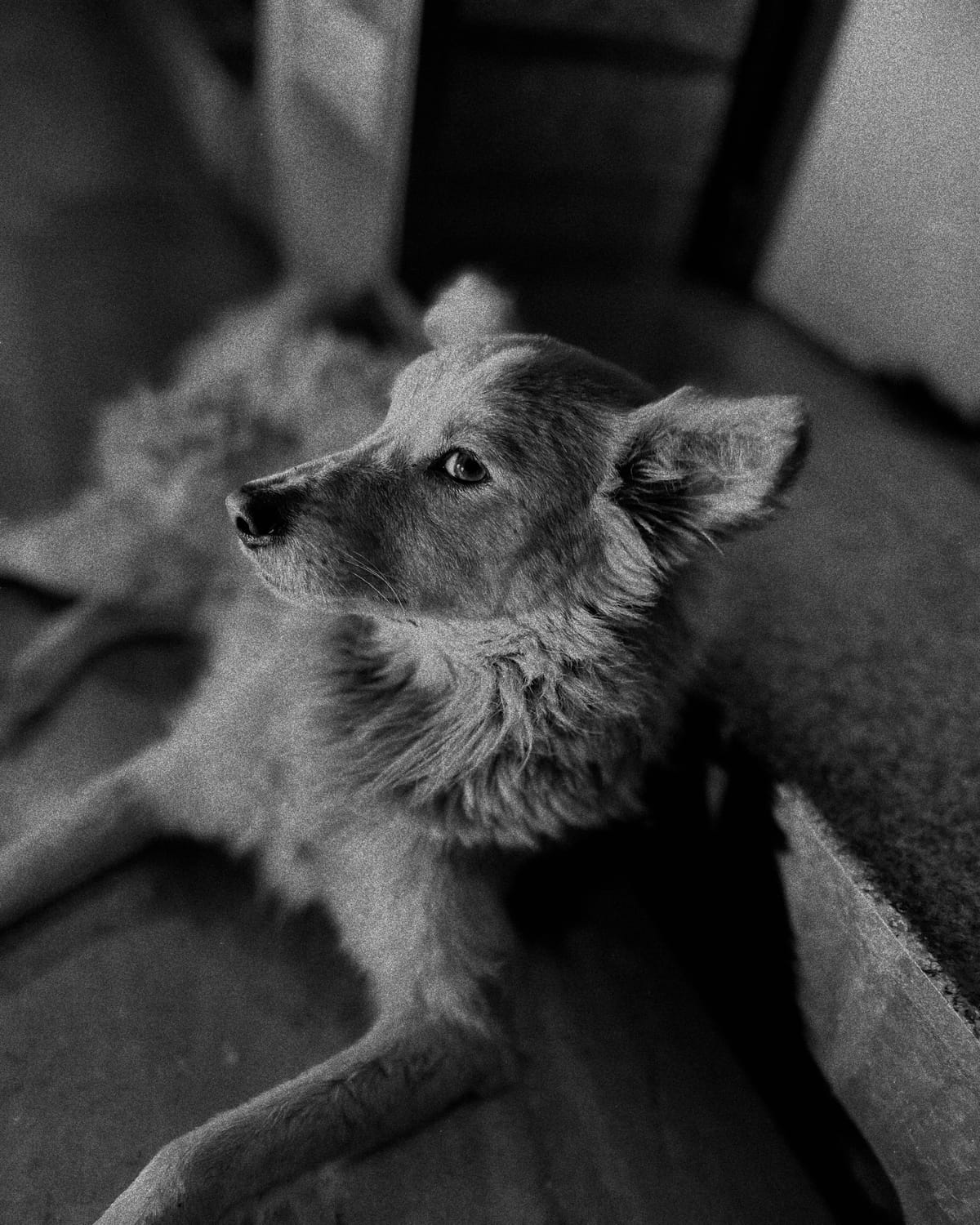
There is an ancient understanding between humans and dogs, one that predates written history. For tens of thousands of years, we have hunted alongside them, sheltered them, and welcomed them into the warmth of our fires. In that time, a silent language has evolved, a language not of words, but of observation, instinct, and an almost supernatural sensitivity to human behaviour. Any devoted dog owner has experienced it: the feeling of being watched by a pair of knowing eyes that seem to see right through a cheerful façade or a nervous smile. It is the distinct, often unsettling, sensation that your dog knows when you are lying.
This is not mere anthropomorphism, nor is it a fanciful notion born of sentimental attachment. In recent years, the fields of ethology (the science of animal behaviour) and cognitive neuroscience have begun to validate what dog lovers have long suspected. The capacity to detect deception is not a mystical sixth sense, but rather a finely honed survival skill, a masterclass in reading the minute, involuntary physiological cues that betray human intent.
To understand how a dog detects a lie, one must first understand the nature of a lie itself. When a human being is dishonest, particularly with someone they have an emotional connection to, the body often betrays the mind. Heart rates fluctuate, breathing patterns shift, and the body releases stress hormones like cortisol. These changes produce subtle but detectable signals: a slight dilation of the pupils, a tensing of the facial muscles, a change in posture, or a micro-expression that flickers across the face for a fraction of a second.
Humans, being visually oriented and verbally dominant, are notoriously poor at perceiving these micro-expressions in others. But a dog is not a human. A dog’s primary sensory apparatus is not its eyes, but its nose, followed by an acute sensitivity to body language. A dog’s olfactory system is estimated to be between ten thousand and one hundred thousand times more sensitive than a human’s. When a person lies, their scent changes. The subtle shift in adrenaline and cortisol, the minute increase in perspiration. All of this creates an olfactory signature that is as obvious to a dog as a flashing neon sign is to a human.
This is the foundation of the dogs, lie detector. Consider the classic experiment often informally conducted in living rooms around the world: a person pretends to throw a ball, hiding it behind their back instead. The dog chases after the phantom throw, only to return confused, sniffing the empty hand. After one or two repetitions, the dog stops chasing. It is not that the dog has been “fooled” into distrust; rather, the dog has learned to read the person’s intent. It has begun to notice the subtle tensing of the arm, the lack of follow through in the shoulder movement, the slight change in breathing that accompanies the deception. The dog no longer believes the lie because it has learned to read the liar.
This ability is rooted in the domestication of the dog, a process that began at least fifteen thousand years ago and perhaps much earlier. Unlike wolves, who evolved to read the body language of other wolves, dogs evolved to read the body language of humans. This evolutionary pressure was immense. The dogs that could best anticipate a human’s actions, determining whether an outstretched hand was about to offer food or deliver a blow, whether a hunter was preparing to throw a spear or preparing to run were the dogs that survived and reproduced. Over millennia, this created an animal uniquely attuned to human intention.
This atonement is so profound that dogs are one of the few non primate species capable of understanding human pointing gestures, a skill that even our closest relatives, chimpanzees, often fail at without extensive training. A dog can look at a person’s eyes, track the direction of their gaze, and follow a pointed finger to a hidden object. This ability to understand referential communication is the same cognitive toolkit that allows them to detect when that communication is insincere.
The implications of this extend far beyond the parlour trick of the fake throw. Dogs can detect the lies we tell ourselves. They are exquisitely sensitive to the discrepancy between our words and our emotional states. A person may say “I’m fine” in a calm voice while their body is rigid with anxiety. A dog does not hear the words; it smells the anxiety, sees the tense shoulders, and registers the rapid blink of the eyes. To the dog, there is no “fine”, there is only the incongruence, and that incongruence is a signal that something is wrong.
This is why dogs are so effective as emotional support and therapy animals. They do not need to be told that a person is distressed; they already know. They respond not to the content of the lie, but to the truth of the body. A dog will often approach a person who is silently suffering, pressing its head into their lap or resting its chin on their knee, precisely because it has detected the mismatch between the person’s public façade and their private reality. In this sense, the dog is not judging the lie; it is responding to the pain that the lie conceals.
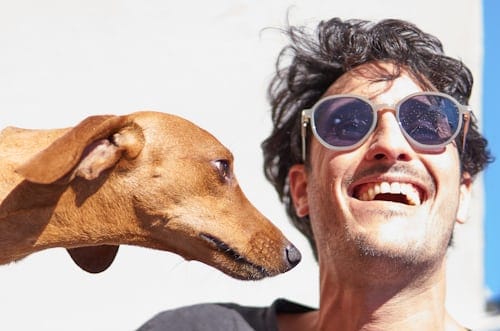
There is also a moral dimension to this sensitivity that has been explored by animal behaviourists. Studies have shown that dogs can distinguish between people who are helpful and people who are unhelpful, and they remember these interactions. In experiments where a person refused to help their owner open a container, dogs later showed a clear preference for accepting treats from a neutral person over the unhelpful one. This suggests that dogs are not merely reacting to immediate cues; they are forming judgments about human character based on past behaviour. They are, in effect, tracking our honesty over time.
The bond between a human and a dog is built on a foundation of trust that is uniquely non-verbal. Because dogs cannot speak, they have become masters of reading the truth. They watch the left side of our faces more intently than the right, because the left side is often more expressive of genuine emotion, controlled by the brain’s right hemisphere which processes emotional content. They listen to the tone of our voice, the rhythm of our breath, the beat of our heart. They compile a vast, silent dossier of our habits, our moods, and our consistency.
When a dog refuses to come when called by a person who has previously punished it for coming, the dog is not being stubborn; it is being honest about its assessment of that person’s trustworthiness. When a dog hides from a visitor who smiles warmly but smells of tension, the dog is not being antisocial; it is detecting a lie that the human guests have missed. The dog lives in a world of pure sensory input, unclouded by the complex social niceties that allow humans to accept polite fictions.
In the end, the dog’s ability to detect deception is one of the most profound legacies of our shared evolutionary history. It is a reminder that before language, there was trust, and that trust was forged in the crucible of mutual survival. A dog does not care about the lies we tell to protect feelings or to navigate social hierarchies. It cares about safety, consistency, and the congruence between what we project and what we feel. When we try to deceive a dog, we are not fooling a simple creature; we are challenging a master of perception that has spent millennia learning to read the human heart.
Perhaps that is why the knowledge that a dog knows when we lie is not unsettling, but comforting. In a world of ambiguity, half-truths, and carefully curated personas, the dog offers a return to something elemental. It offers a relationship stripped of preteens. A dog will not love a lie, but it will love the truth of a person, their real mood, their genuine intent, their authentic self. And in that uncompromising honesty, there is a unique and unwavering loyalty that no deception can ever erode.