More Than a Full Bowl: The Beautiful Truth About Why Your Dog Loves You First
There is a moment in every dog owner’s life that feels like pure magic. You walk through the front door after a long, exhausting day, maybe you’re tired, maybe you’re stressed, maybe you haven’t showered and there they are. Your dog ...
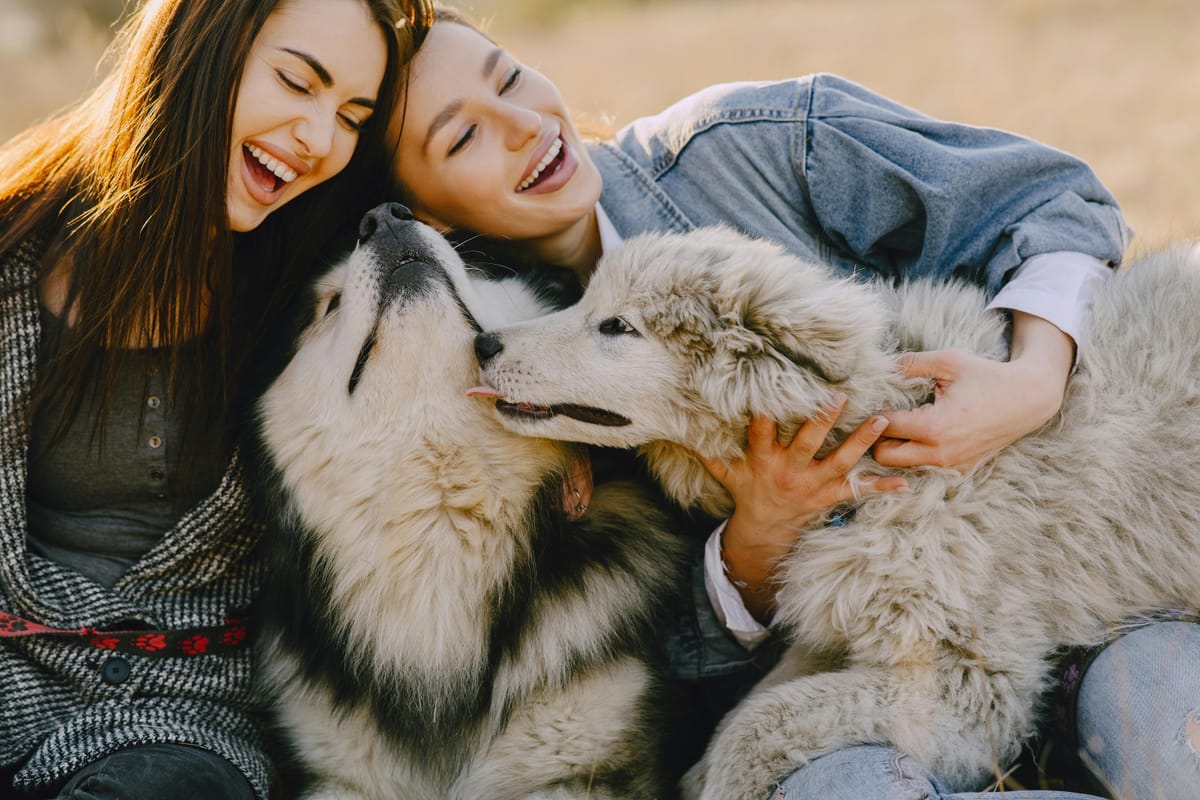
There is a moment in every dog owner’s life that feels like pure magic. You walk through the front door after a long, exhausting day, maybe you’re tired, maybe you’re stressed, maybe you haven’t showered and there they are. Your dog. Their whole body becomes a wiggling, tail-whipping, joyful explosion of pure welcome. They don’t ask if you brought them a treat. They don’t sniff your pockets for a biscuit before deciding whether to greet you. They simply celebrate you. In that moment, it becomes undeniable: this creature’s happiness is not transactional. It is personal.
For a long time, scientists and behaviourists operated under a fairly simple, somewhat cynical assumption about dogs. The thinking went like this: dogs are masterful scavengers who evolved alongside humans because we provided food. Your dog sits because you have a treat. Your dog comes when called because you might have a handful of kibble. Your dog loves you, the theory suggested, because you are the keeper of the cheese. It was a tidy, logical explanation. But like many tidy explanations about love, it missed the messy, beautiful, and profoundly moving truth.
In recent years, researchers have turned this assumption on its head with a series of fascinating experiments, and the results have made dog lovers everywhere nod their heads with tearful satisfaction. One of the most famous studies involved something called a “choice test.” Dogs were given a simple but powerful decision. On one side of the room, a bowl of their absolute favourite food, think hot dogs, chicken, or liver treats. On the other side, their owner. The owner was instructed to sit quietly, offering no food, no toys, no excited voices. Just their presence. Time and again, the majority of dogs walked right past the steaming, delicious bowl of food to sit beside their human. They chose connection over consumption. They chose relationship over reward.
Think about the weight of that for a moment. Every dog owner knows the power of a good treat. You have seen your dog drool at the sound of the cheese drawer opening. You have witnessed them perform their most theatrical “sit” for a crumb of bacon. Yet, given a free choice, they turned their back on that primal drive, the drive for food, for survival, to simply be near you. That is not conditioning. That is not a trick. That is something far more extraordinary. That is love.
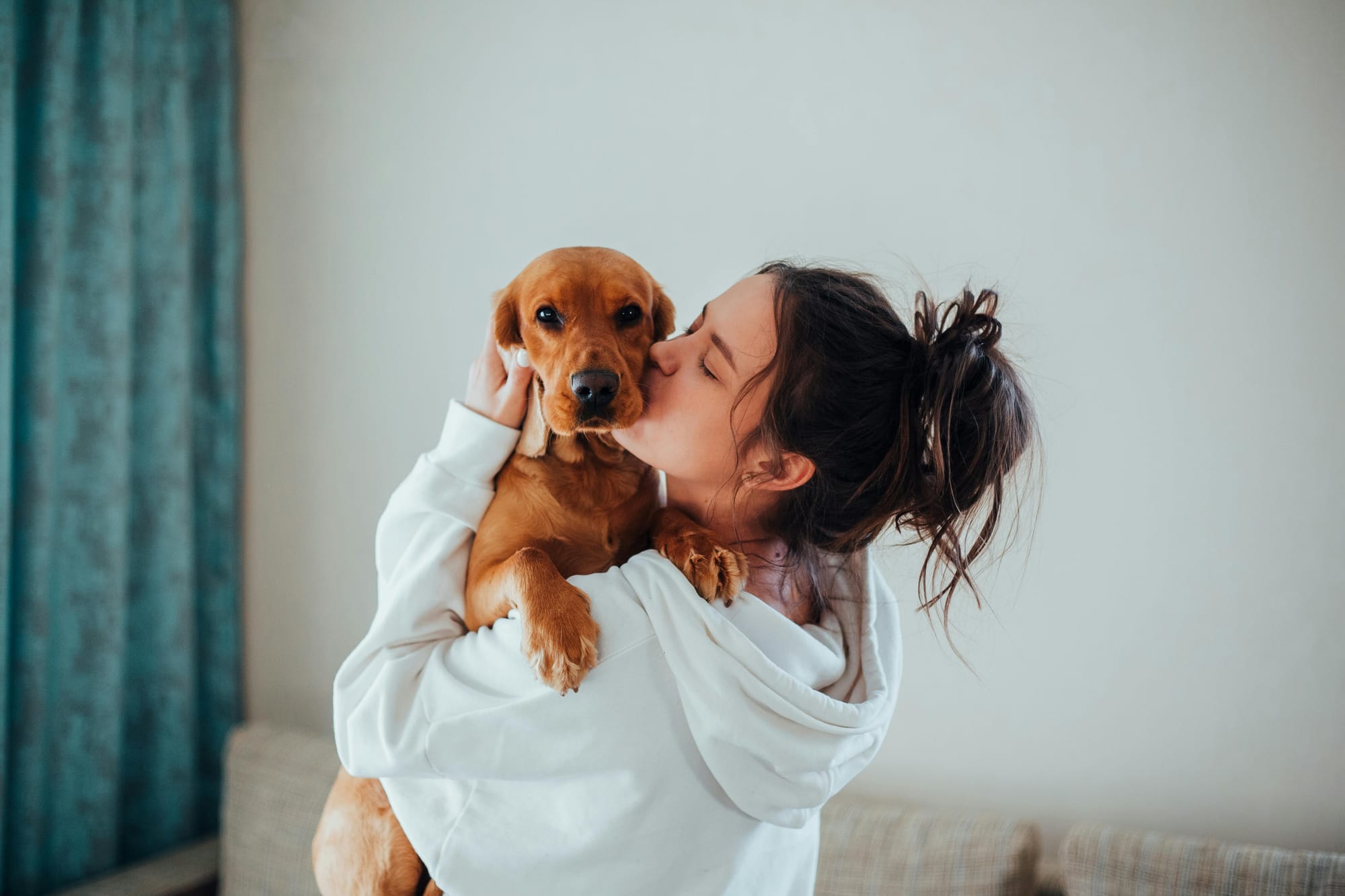
But how can we be sure? After all, dogs cannot fill out a questionnaire about their feelings. This is where another beautiful piece of science comes in, and it involves a hormone you may have heard of: oxytocin, often called the “love hormone” or “bonding chemical.” When a human parent gazes at their new born baby, both parent and baby experience a surge of oxytocin. It is the neurological glue of attachment. Remarkably, the exact same thing happens when you and your dog look into each other’s eyes. Studies have shown that when a dog and their owner share a long, soft gaze, oxytocin levels rise in both species. Your dog’s brain literally floods with the same chemical that bonds a mother to her child when they look at you. And here is the kicker: that oxytocin surge does not happen when a dog looks at a stranger, nor does it happen when a wolf looks at a human. It is a unique, co-evolved loop of affection between domestic dogs and their specific people.
So what does this look like in everyday life, beyond the laboratory? It looks like the dog who refuses to eat their dinner until you come sit on the couch with them. It looks like the dog who, during a thunderstorm, presses their trembling body against your legs instead of running to the kitchen where the treat jar lives. It looks like the senior dog who has gone mostly deaf and blind but still lifts their head and wags their tail the moment they catch your scent in the room. These are not behaviours driven by hunger. They are behaviours driven by attachment, by safety, by the deep and abiding knowledge that you are home.
Perhaps the most touching evidence comes from the concept of “secure base effect.” In human psychology, a young child will explore a new, scary room confidently only if their parent is nearby. The parent is the “secure base.” The same is true for dogs. In a fascinating study, dogs were placed in an unfamiliar environment with their owner. They explored, sniffed, and played. Then the owner left, and a stranger entered. The dogs became anxious, stopped exploring, and often whined. When the owner returned, the dogs rushed to greet them, and then this is crucial, they felt safe enough to resume exploring again. The stranger, even if they offered food, could not provide that same sense of security. Your dog does not love you because you feed them. Your dog loves you because you make the world feel less scary. You are their anchor.
None of this is to say that dogs don’t love food. They absolutely do. Anyone who has been woken up by a cold nose at 6 AM because breakfast is late knows that food is a powerful force. But the relationship between dog and owner is not a vending machine scenario, put in a treat, get out affection. It is far richer. A truly happy, well-loved dog sees food as a fun bonus, not the foundation of their world. You are the foundation. The proof is in the dog who leaves half their bowl untouched to follow you into the next room. The proof is in the dog who drops a piece of stolen pizza at your feet to show you, proudly, because sharing with you is better than eating alone.
When you really stop to think about it, what your dog offers is a kind of love that humans spend lifetimes searching for. It is unconditional. It does not depend on your job, your looks, your mood, or your mistakes. It does not require you to be perfect. Your dog does not love you because you are the best human. Your dog loves you because you are their human. And that, more than any treat or any toy, is the greatest reward either of you will ever know.
In the end, the science and the everyday lyived experience point to the same heart warming conclusion. While dogs certainly enjoy food and respond eagerly to treats, their deepest loyalty is reserved not for the hand that feeds, but for the heart that loves them back. From choosing their owner’s presence over a bowl of steak, to the shared gaze that releases oxytocin in their brain, to the way they relax and explore the world only when you are nearby, the evidence is overwhelming. Your dog does not love you for what you provide. Your dog loves you for who you are to them: safety, joy, family, and home. The food bowl fills their belly. But you fill something far more important. You fill their heart.