Reading Your Dog’s Stress Signals Before You Leave the House
Before you even open the front door, before the leash clicks onto the collar, a conversation is already taking place. Your dog is communicating their emotional state through a series of subtle, easily missed signals ...
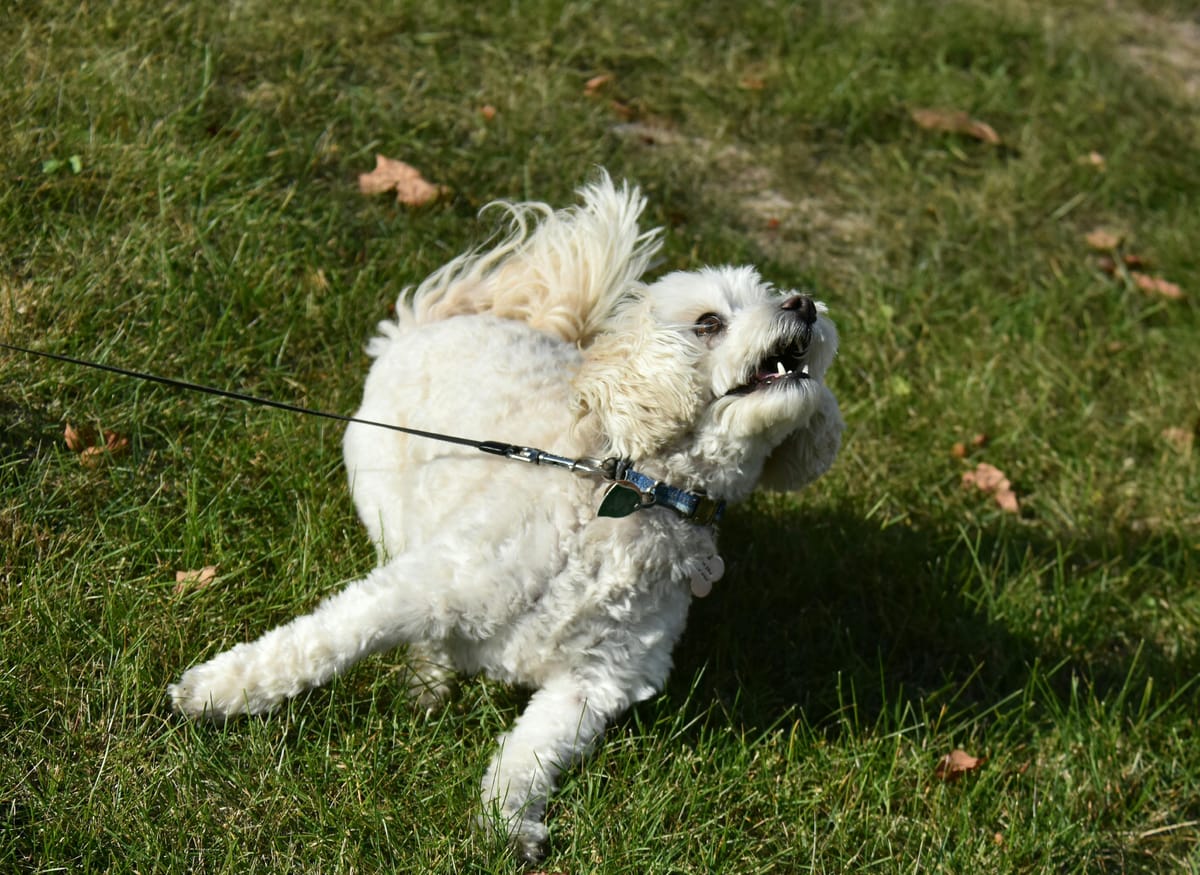
There is a familiar image that lives in most dog owners’ minds. You reach for the leash, and your dog erupts into joyful chaos, spinning in circles, tail whipping back and forth, letting out excited barks, and racing to the front door. This is the dream. This is what we expect. But what happens when your dog does not react that way? What happens when you pick up the leash and your dog yawns, licks their lips, or suddenly becomes very interested in sniffing the floor? Many owners misinterpret these moments. They might think their dog is tired, stubborn, or simply not in the mood. But often, something far more important is happening. Your dog is trying to tell you that they are not okay.
Before you even open the front door, before the leash clicks onto the collar, a conversation is already taking place. Your dog is communicating their emotional state through a series of subtle, easily missed signals. Learning to recognize these pre-walk stress signs is not just about having a more pleasant outing. It is about respecting your dog’s boundaries, preventing fear-based reactions, and protecting the trust that forms the foundation of your entire relationship. A walk should never be something your dog endures. It should be something they genuinely enjoy. And sometimes, the kindest thing you can do is pause, listen, and wait.
Let us start with the most commonly misunderstood stress signal: the yawn. In human language, a yawn means tiredness or boredom. In dog language, a yawn can mean those things, but it can also mean anxiety. A dog who yawns deeply and repeatedly while you are putting on your shoes or attaching the leash is not necessarily sleepy. They may be experiencing rising stress levels. This is called a calming signal, a term popularized by the Norwegian dog trainer Turid Ragas. Calming signals are your dog’s way of trying to soothe themselves and communicate to you that they feel uneasy. Other calming signals include lip licking when no food is present, turning the head away, blinking softly, or suddenly freezing in place. If your dog licks their nose or lips the moment you pick up the leash, they are not anticipating a treat. They are telling you that something about this moment feels uncomfortable.
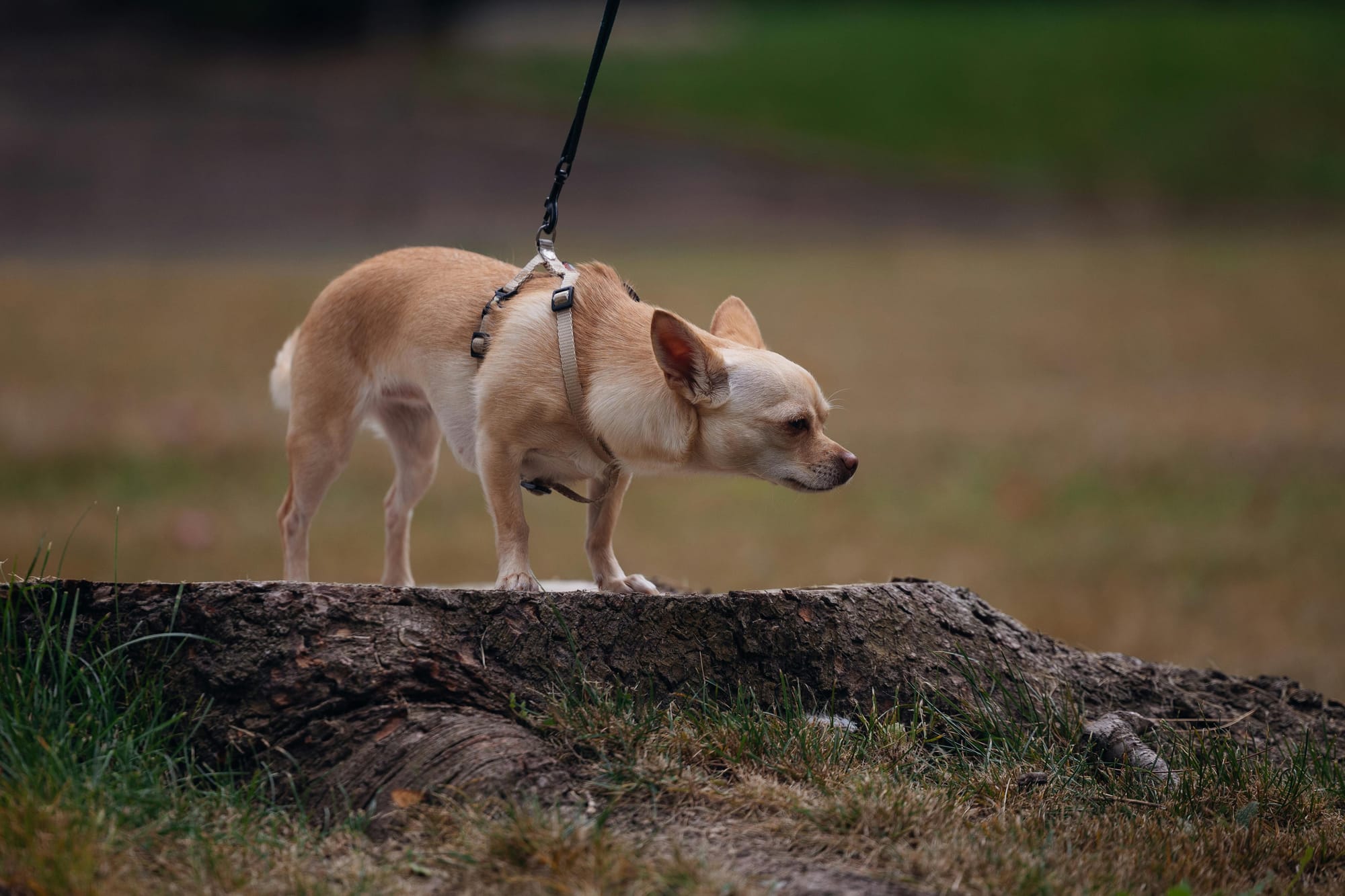
Another critical pre-walk stress signal involves the body posture. A happy, excited dog has a loose, wiggly body. Their tail wags in broad, sweeping arcs. Their ears are relaxed or perked forward with curiosity. A stressed dog, by contrast, often holds their body lower to the ground. Their tail might be tucked slightly or wagging in short, tight, rapid movements that are nothing like the joyful full-body wag. Their ears may be pinned back against their head. Their back might be slightly hunched. Some dogs will lean away from the door or try to make themselves smaller. Others will show what is called a half-moon eye or whale eye, where you can see the white crescent of their sclera because they are turning their head away but keeping their eyes fixed on the source of their stress, in this case, you and the leash. This is not a sign of defiance. It is a sign of fear.
Pacing is another red flag that often goes ignored. A dog who cannot settle while you prepare for a walk, who walks back and forth in short, repetitive patterns, is showing you their internal agitation. This is different from excited bouncing. Excitement is chaotic but joyful. Stress pacing is tight, mechanical, and often accompanied by panting that is not related to heat or exercise. A stressed dog pants with a tense mouth, often with the corners pulled back slightly, and the tongue may be curled upward at the tip. A relaxed dog pants with a soft, open mouth and a floppy tongue. Learning to see the difference in those few seconds before you leave can change everything.
Perhaps the most heart-breaking stress signal is the one that looks like obedience. A dog who suddenly sits perfectly still, who freezes with a stiff posture and avoids eye contact, is not being a “good dog” waiting patiently. They are shutting down. Freezing is a last-resort stress response when a dog feels overwhelmed and sees no way to escape. They are not relaxed. They are not being polite. They are silently enduring a situation that frightens them, and if you proceed with the walk, you may inadvertently reinforce that endurance without addressing the underlying fear. This dog is not going to have a good walk. They are going to survive a walk.
So why would a dog be stressed before a walk even begins? The reasons are as varied as dogs themselves. Perhaps the last walk included a terrifying encounter with a loose dog, a loud garbage truck, or a child who screamed and ran toward them. Dogs have excellent memories for traumatic events, and the leash itself can become a conditioned trigger for fear. Perhaps the dog is experiencing physical pain from arthritis, a torn nail, or an ear infection, and they have learned that walks hurt. Perhaps the environment outside the door is simply too overwhelming, too much noise, too much traffic, too many unpredictable movements. For a dog who is already anxious, the anticipation of stepping into that chaos can cause stress signals to appear long before the door opens.
The weather can also play a hidden role. Some dogs are deeply distressed by the sound of wind, rain on a metal awning, or the low rumble of distant thunder. They cannot tell you that the forecast is making them uneasy, but their pre-walk yawning and lip licking will tell you everything. Similarly, changes in your own emotional state matter. Dogs are extraordinary readers of human body language and scent. If you are rushing, frustrated, or anxious about being late for work, your dog will absorb that energy. Your tension becomes their tension. The leash in your hand, held tightly because you are in a hurry, feels different to them than a leash held loosely with a relaxed arm.
What do you do when you recognize these signals? The answer is not always to cancel the walk entirely. Sometimes, you simply need to pause and change the routine. Sit down on the floor. Put the leash down. Breathe deeply for a moment. Let your dog approach you. Offer a few gentle treats without asking for any behaviour. Let the leash become neutral again. You might need to desensitize your dog to the sight of the leash by pairing it with something positive over several days, picking up the leash, treating your dog, putting the leash down, repeating until the leash predicts good things, not stress.
Sometimes, the kindest choice is to skip the walk altogether and find another way to meet your dog’s needs. A game of tug in the living room, scatter feeding kibble in the grass of your own fenced yard, or working on simple trick training indoors can provide mental and physical enrichment without forcing your dog through a front door that represents fear. A walk is not the only form of exercise or stimulation. A stressed dog who is pushed into a walk may become reactive on leash, barking and lunging at triggers, not because they are aggressive but because they have been flooded with anxiety and have no other way to cope. Preventing that outburst by staying home is not coddling. It is compassionate management.
The most important thing to remember is that your dog is not giving you a hard time. Your dog is having a hard time. Those stress signals are not manipulation. They are not stubbornness. They are the only voice your dog has. When you learn to see the yawn, the lip lick, the tucked tail, the frozen posture, and the half-moon eye, you are learning to speak your dog’s language. And that language is always asking the same thing: “Please see me. Please hear me. Please keep me safe.”
Recognizing your dog’s stress signals before a walk is one of the most important skills a caring owner can develop. The signs are often subtle but unmistakable once you know what to look for, repetitive yawning, lip licking when no food is present, a tense or lowered body posture, tight rapid tail wags, pinned ears, half-moon eyes, pacing, panting with a tense mouth, or a sudden frozen stillness. These signals are not signs of a “bad” or “lazy” dog. They are communications of genuine discomfort, fear, or pain. Before you ever reach for the leash, pause and observe your dog. If you see these signs, do not push forward. Instead, stop. Sit down. Put the leash away. Offer comfort and safety. Ask yourself what might be wrong, a past trauma, physical pain, overwhelming environmental noise, or even your own hurried mood. Then choose a different path. Play indoors. Scatter food in the yard. Practice gentle training games. A walk is meant to be a joy, not an ordeal. Your dog trusts you to know the difference. By learning to read their quiet signals and respecting what they tell you, you preserve that trust. You show your dog that their feelings matter. And in doing so, you transform yourself from someone who simply walks a dog into someone who truly listens to one. The walk can wait. Your dog’s peace of mind cannot.