Senior Dogs, Endless Love
In the quietest moments, you’ll find the deepest love. The frantic energy of puppyhood is a distant memory, replaced by the reassuring, heavy weight of their head on your lap ...
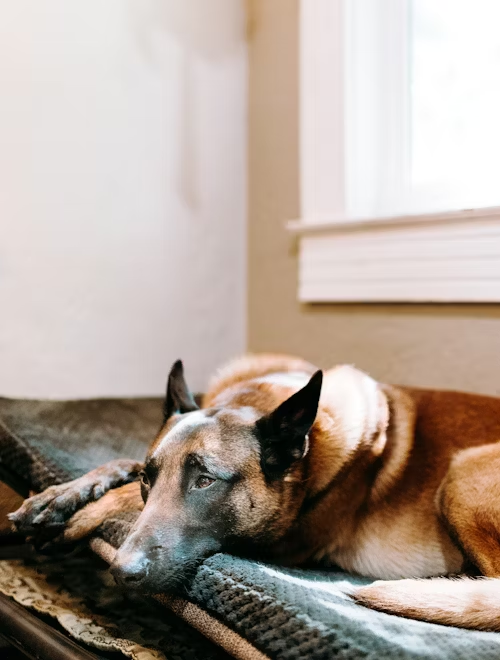
In the quietest moments, you’ll find the deepest love. The frantic energy of puppyhood is a distant memory, replaced by the reassuring, heavy weight of their head on your lap and the soft, rhythmic sigh of contented sleep. Caring for a senior dog is a tender commitment.
The white muzzle is a badge of honour, a constellation of silver that tells a story no puppy can yet understand. It speaks of countless sunrises, a thousand silly walks, and a lifetime spent as the steadfast shadow to a human heart. When their fur begins to thin and their steps grow tentative, we realize we are entering the final, most precious chapter of an extraordinary book. Caring for a senior dog isn't just about managing slowing bodies; it is an immersion in the truest form of unconditional love, a beautiful, deeper connection where quiet moments outweigh all the boisterous adventures of youth. This is the season of endless love, where every slow blink and contented sigh is a treasure beyond measure.
There is a profound shift in the relationship when the dog becomes the patient, and the owner becomes the primary caregiver. It’s a slow-motion trade, exchanging the exuberance of long hikes for the tender ritual of a slow, assisted waddle around the yard. I remember my old lab, Gus, when his hips finally decided they were done with stairs. He’d stand at the foot of the flight, tail giving a slow, uncertain thump, his eyes pleading not for a miracle cure, but for help. The weight of his body in my arms, a familiar, comforting heft, became the new language of our bond. I’d carry him up to bed, and he would sigh deep, contented sound as he settled onto his orthopaedic foam, a sigh that always felt like a whispered thank you. It was in those moments, trading my back for his comfort, that the endless thread of our connection tightened, becoming something almost sacred.
The challenges are real, a gauntlet of late-night pacing, unexpected accidents, and the ceaseless monitoring of a worsening limp. But for every difficult moment, there is a counter-moment of pure, golden reward. The way an old dog, half-blind and slightly deaf, can still find its way back to your side the moment you sit down.
My friend Sarah recently shared the story of her Beagle, Daisy, who developed Canine Cognitive Dysfunction. Daisy would pace the house at 3 a.m., disoriented and anxious, sometimes staring at the wall. Sarah didn't get angry; she didn't complain. She would simply get up, put Daisy’s leash on, and take her outside to sit under the vast, silent stars. They wouldn't walk they'd just be. In that quiet darkness, with the cool grass beneath them, Daisy would slowly come back to herself, leaning heavily against Sarah’s leg. It was an affirmation that love, at its core, is a commitment to presence, a willingness to be the anchor when the world gets confusing.
These old souls teach us patience and the immense value of living in the present. They don't fret about the future; they just want the sunbeam on the rug, a soft bed, and the reassurance of your touch. Their slow pace is a gift, a gentle deceleration in our frantic lives that forces us to notice the details: the unique, sweet hayfield smell of their fur, the soft rasp of their breathing as they dream, the wisdom etched around their eyes.
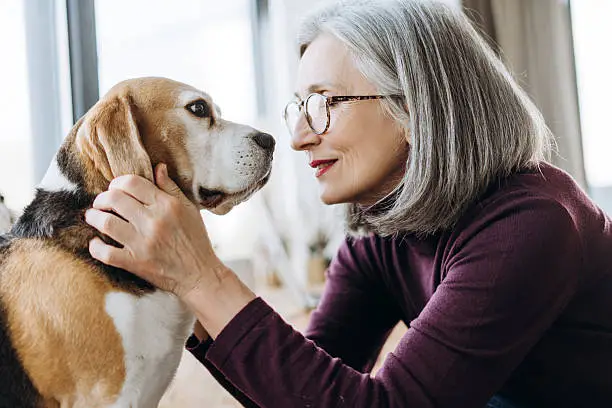
To care for a senior dog is to receive a final, beautiful lesson in love, one that is deeper, quieter, and more profound than any you could learn from a vibrant young pup. It is a slow, emotional journey that ends in heartbreak, yes, but one paved with the endless gold of gratitude. We get to give them the final, perfect home they deserve, offering comfort and dignity until their very last breath, knowing that their spirit, a wellspring of unconditional love, will remain with us long after the thumping tail is still.
The white muzzle is a badge of honour, a constellation of silver that tells a story no puppy can yet understand. It speaks of countless sunrises, a thousand silly walks, and a lifetime spent as the steadfast shadow to a human heart. When their fur begins to thin and their steps grow tentative, we realize we are entering the final, most precious chapter of an extraordinary book. Caring for a senior dog isn't just about managing slowing bodies; it is an immersion in the truest form of unconditional love, a beautiful, deeper connection where quiet moments outweigh all the boisterous adventures of youth. This is the season of endless love, where every slow blink and contented sigh is a treasure beyond measure.
There is a profound shift in the relationship when the dog becomes the patient, and the owner becomes the primary caregiver. It’s a slow-motion trade, exchanging the exuberance of long hikes for the tender ritual of a slow, assisted waddle around the yard. I remember my old lab, Gus, when his hips finally decided they were done with stairs. He’d stand at the foot of the flight, tail giving a slow, uncertain thump, his eyes pleading not for a miracle cure, but for help. The weight of his body in my arms, a familiar, comforting heft, became the new language of our bond. I’d carry him up to bed, and he would sigh—a deep, contented sound—as he settled onto his orthopaedic foam, a sigh that always felt like a whispered 'thank you.' It was in those moments, trading my back for his comfort, that the endless thread of our connection tightened, becoming something almost sacred.
The challenges are real, a gauntlet of late-night pacing, unexpected accidents, and the ceaseless monitoring of a worsening limp. But for every difficult moment, there is a counter-moment of pure, golden reward. The way an old dog, half-blind and slightly deaf, can still find its way back to your side the moment you sit down. The deep, heavy thud of their head resting on your knee, a gesture that says, This is my safe harbour, and you are my world.
My friend Sarah recently shared the story of her Beagle, Daisy, who developed Canine Cognitive Dysfunction. Daisy would pace the house at 3 a.m., disoriented and anxious, sometimes staring at the wall. Sarah didn't get angry; she didn't complain. She would simply get up, put Daisy’s leash on, and take her outside to sit under the vast, silent stars. They wouldn't walk—they'd just be. In that quiet darkness, with the cool grass beneath them, Daisy would slowly come back to herself, leaning heavily against Sarah’s leg. It was an affirmation that love, at its core, is a commitment to presence, a willingness to be the anchor when the world gets confusing.
These old souls teach us patience and the immense value of living in the present. They don't fret about the future; they just want the sunbeam on the rug, a soft bed, and the reassurance of your touch. Their slow pace is a gift, a gentle deceleration in our frantic lives that forces us to notice the details: the unique, sweet hayfield smell of their fur, the soft rasp of their breathing as they dream, the wisdom etched around their eyes.
To care for a senior dog is to receive a final, beautiful lesson in love, one that is deeper, quieter, and more profound than any you could learn from a vibrant young pup. It is a slow, emotional journey that ends in heartbreak, yes, but one paved with the endless gold of gratitude. We get to give them the final, perfect home they deserve, offering comfort and dignity until their very last breath, knowing that their spirit, a wellspring of unconditional love, will remain with us long after the thumping tail is still.