Where Courage Met a Cold Nose
There is a special kind of courage, one that does not speak in human words but in the quiet panting of breath on a frozen wind. It is a courage found in the steady rhythm of paws against the snow, a loyalty ...
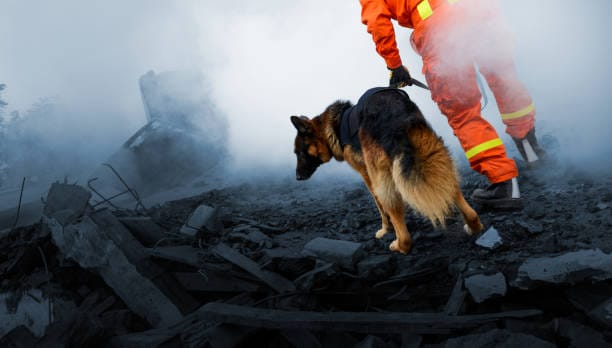
There is a special kind of courage, one that does not speak in human words but in the quiet panting of breath on a frozen wind. It is a courage found in the steady rhythm of paws against the snow, a loyalty so profound it would stare into the heart of an Arctic blizzard to save a life. This is the story of one such dog, whose unshakable will became the beacon of hope for an entire town, and whose name would forever be whispered with gratitude.
The blizzard of 1925 had swallowed the world whole. In the isolated Alaskan town of Nome, a deadly diphtheria outbreak threatened every child. The only serum that could save them was a thousand miles away, and the only way to get it through the frozen wilderness was by sled dog. The final, most brutal leg of this relay fell to a musher named Gunnar Kaasen and his lead dog, a sleek Siberian Husky named Balto.
Balto was not the fastest dog, nor the most celebrated, but he possessed something more valuable that day: an unshakable will and an almost mystical sense of direction. As they pushed into the night, the storm escalated into a white fury. The wind screamed, driving the temperature to fifty below zero. Kaasen was blinded, the trail vanished, and the world shrunk to the howling void between his sled and Balto’s determined back.
When they finally stumbled into Nome in the early morning hours, Balto was ice-encrusted and exhausted, his paws raw. He had led his team 53 miles through the heart of the Arctic’s worst blizzard. As the medicine was rushed to the hospital, the legend was born. Balto became a symbol of unwavering courage, a testament to the fact that the greatest heroes sometimes have four paws and a cold, wet nose, leading the way through the darkest of storms.
At one point, a powerful gust flipped the sled, sending the vital serum crate flying into a snowbank. Kaasen, his hands frozen and numb, had to dig desperately to recover it. He was lost, disoriented, and certain they would never make it. But through it all, Balto never faltered. He pressed forward, his paws cracking through the ice, his body leaning into the harness, pulling not just the weight of the sled, but the hopes of an entire town. He navigated by a sense deeper than sight, guided by an invisible thread of loyalty to the man behind him and the children waiting ahead.
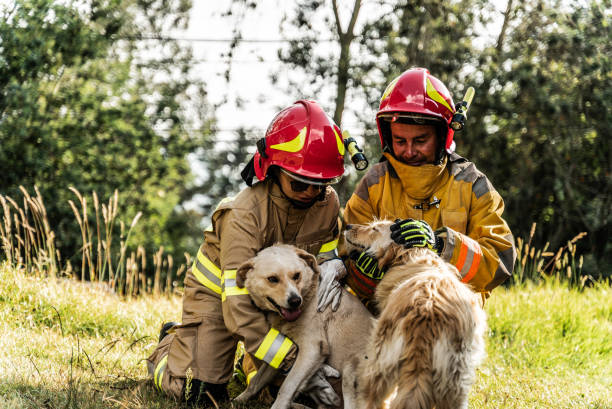
The true essence of heroism is often found in the spontaneous, selfless act, and throughout history, the dog has proven to be an astonishingly reliable source of this pure, instinctual courage. These are not tales of obedience, but of a profound moral imperative, where a dog’s only motive is the protection of its beloved human family or the execution of a mission with a resolve that shames our own tendency toward self-preservation. They are the quiet, four-legged warriors whose legacies are written in lives saved and in history redefined by their fierce loyalty.